
Last updated November 15, 2026
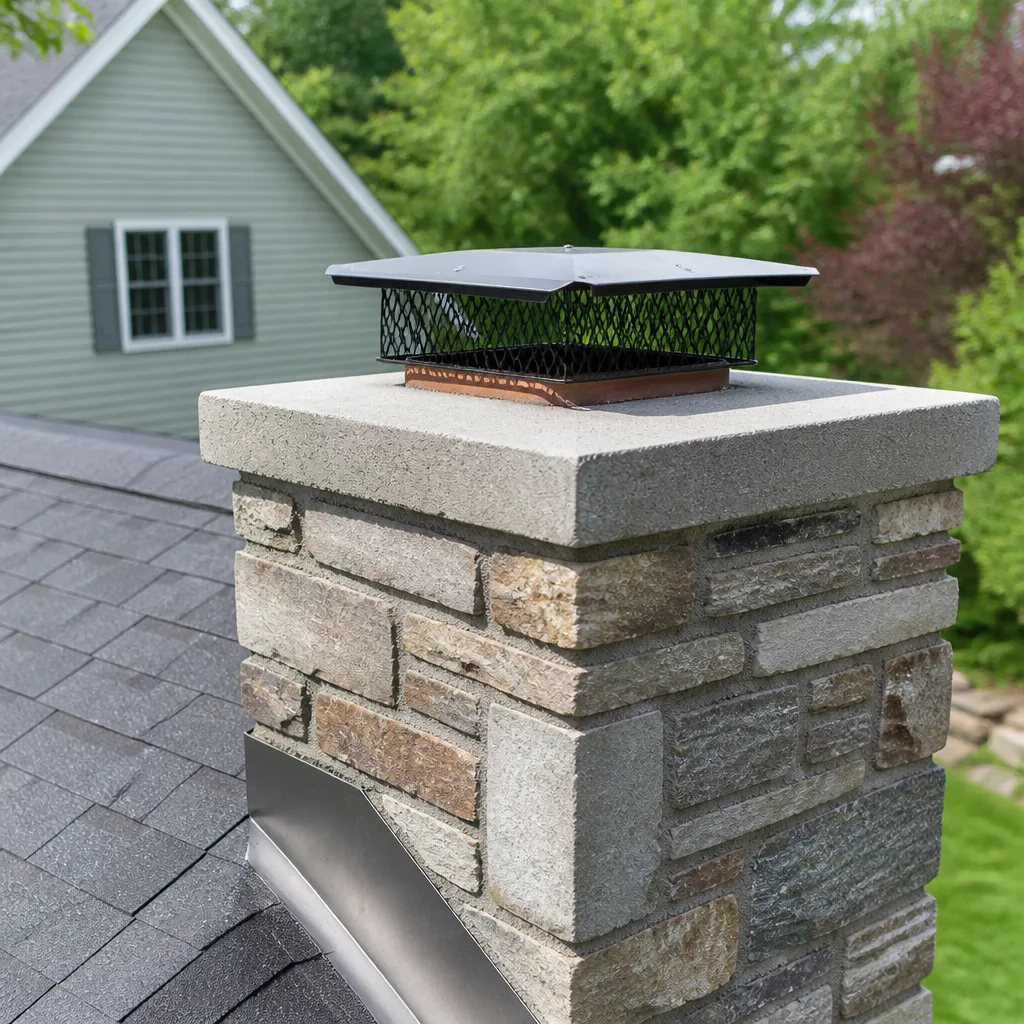 Sweep & inspection
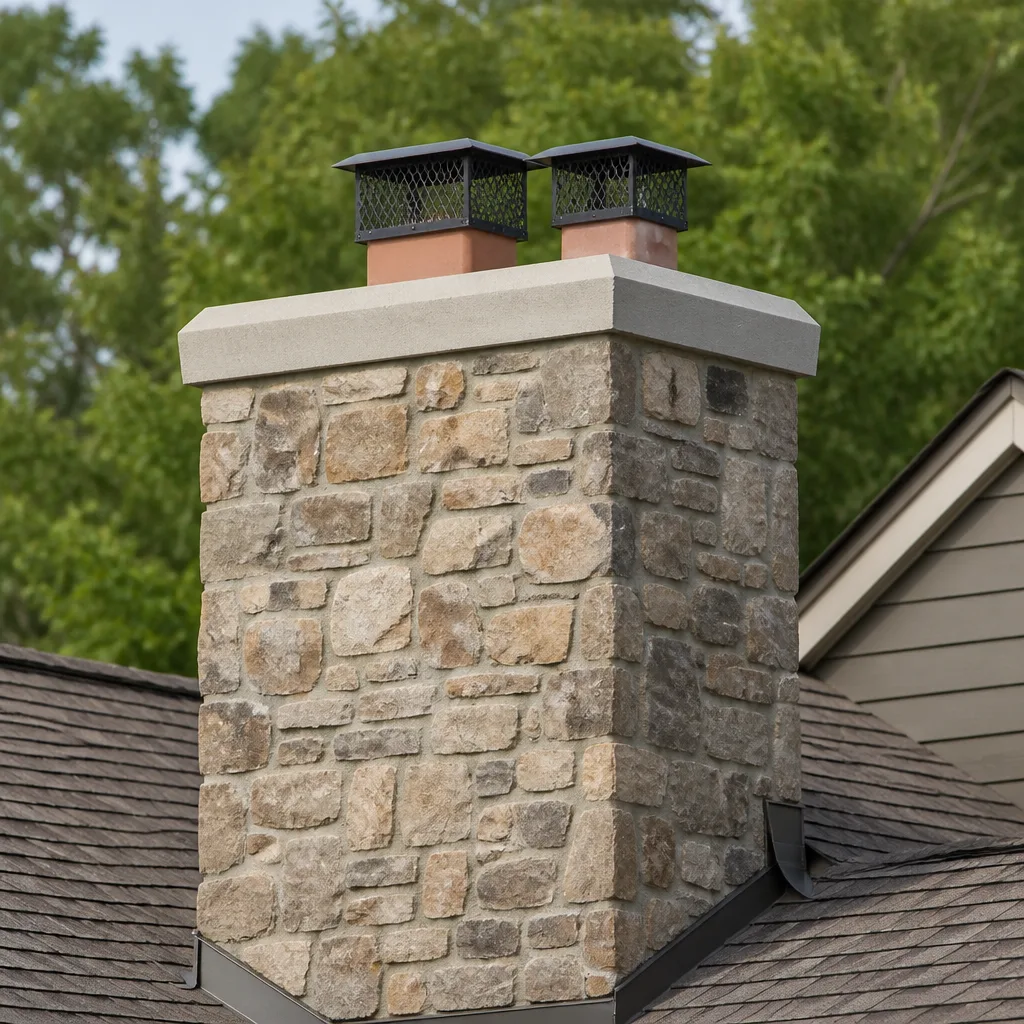 Caps & crowns
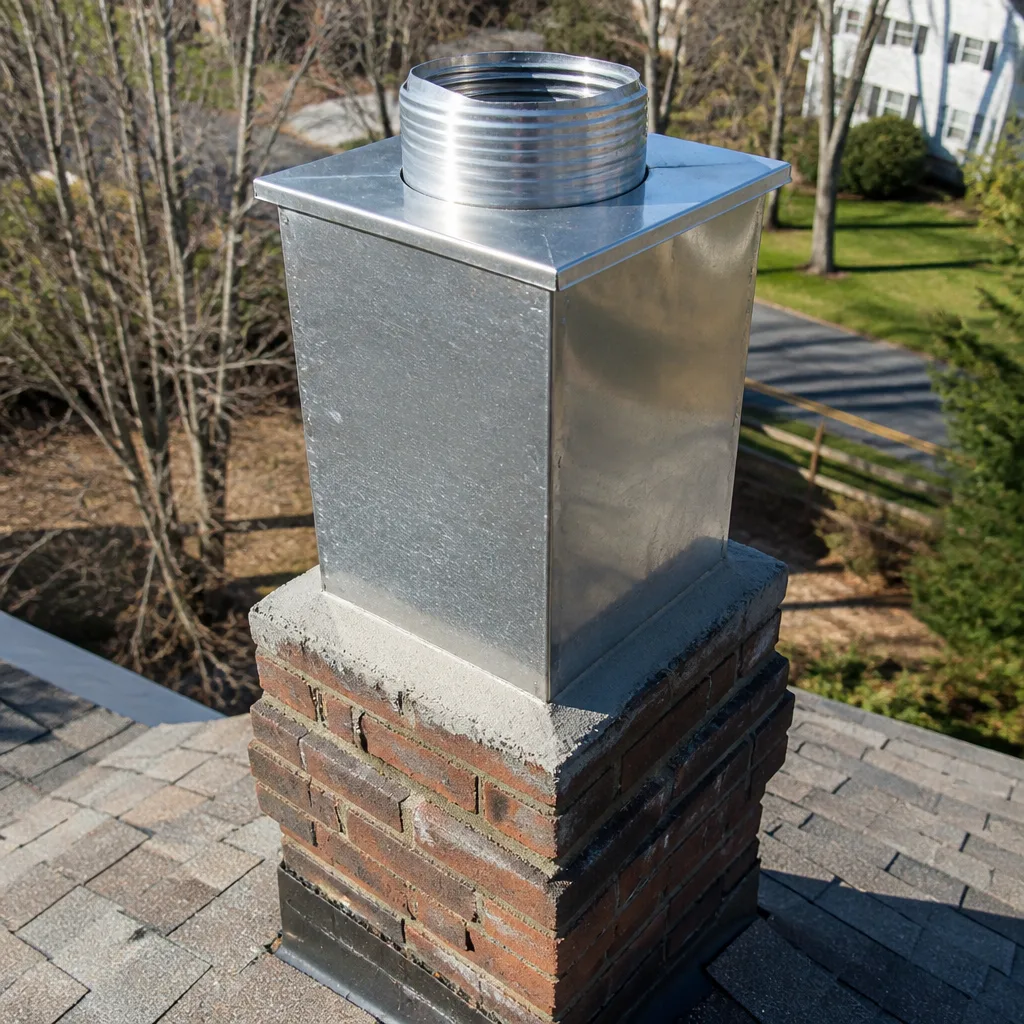 Flue relining
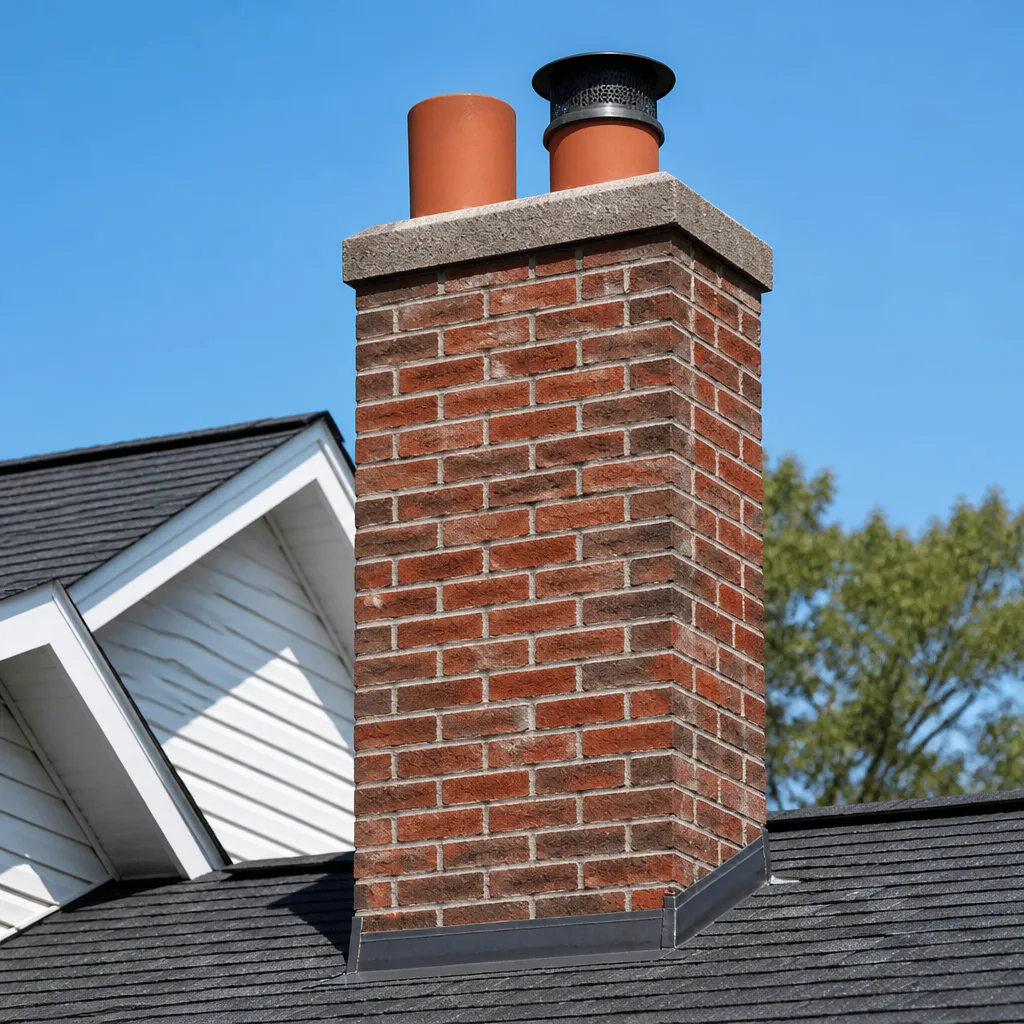 Masonry repair
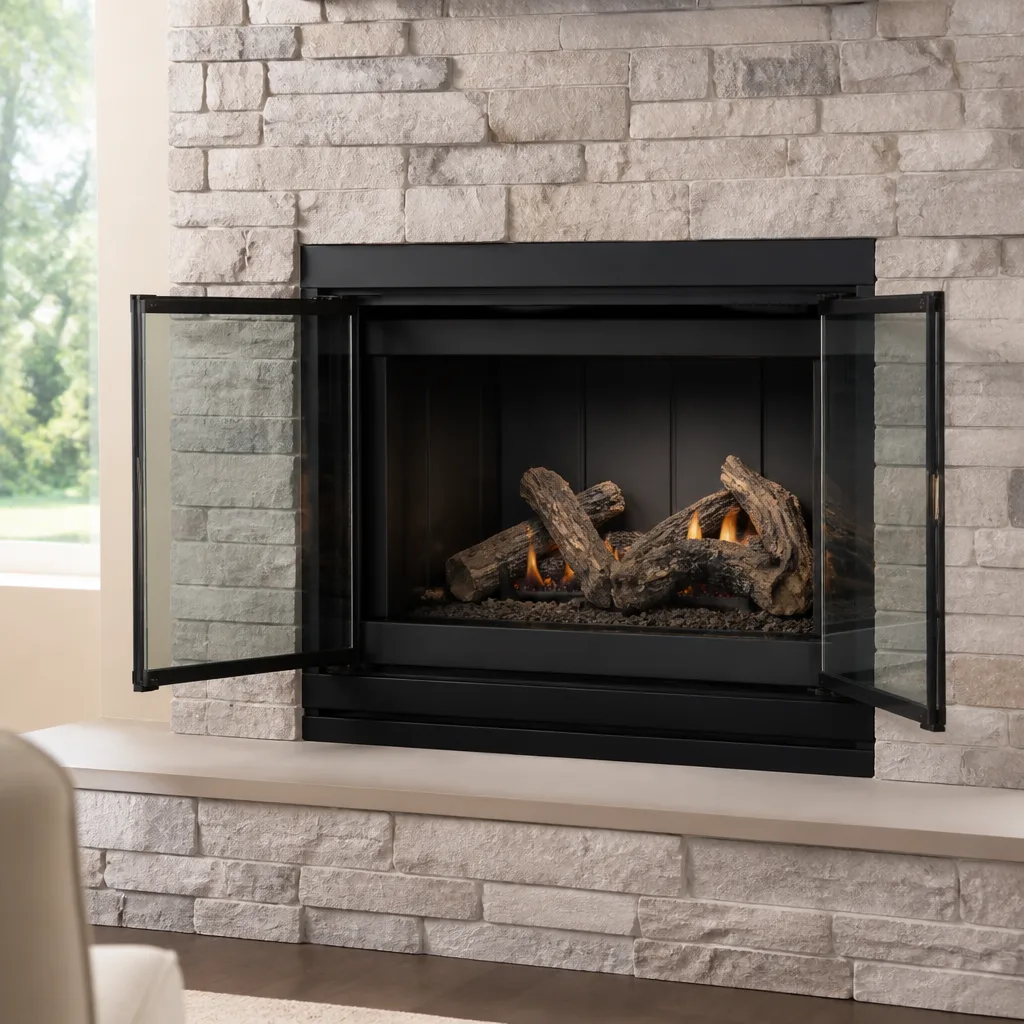 Gas fireplace service
Level 1 sweep and inspection to the NFPA 211 annual standard - flue, crown, cap, and flashing checked and photographed
Chimney sweep logs do not sweep chimneys. They loosen some creosote - which then falls where a brush and vacuum still have to collect it.
Chimney Sweep Troubleshooting in Hollywood: Common Problems and How to Fix Them
If your fireplace smokes into the room every time humidity climbs, the problem probably isn’t your damper. In tightly sealed South Florida homes, the more likely culprit is negative air pressure, and cracking a window an inch will confirm it in about a minute. That single test saves Hollywood homeowners from paying for repairs they don’t need. Most chimney symptoms people blame on the fireplace itself – smoke rollback, stubborn odors, weak draft – are really diagnostic clues pointing to one of four fixable root causes. This guide teaches you to read those clues, sort the safe adjustments from the stop-use-now signals, and know exactly when to call.
Quick Answer
Most chimney problems in Hollywood trace back to one of four causes: negative air pressure from a tight house, a failed cap or crown letting water in, creosote buildup, or an animal that got past the cap. You can identify which one with a few simple checks – the window test for pressure, a visual look at the cap and crown, and the smell test for odor. Anything involving a damaged flue, cracked masonry in the firebox, or a strong chemical smell means stop using the fireplace and get a professional inspection before you burn again.
Styles & brands we work with
- Sweep & inspection
- Caps & crowns
- Flue relining
- Masonry repair
- Gas fireplace service
Table of Contents
- Why your fireplace smokes and how to test for negative air pressure
- How Hollywood humidity and salt air damage a chimney differently
- Creosote odor vs. animal odor: telling them apart
- Reading water stains inside the firebox
- Creosote stages and what each one means
- DIY adjustments vs. stop-use safety signals
- Slow draft and cold-start problems
- Common mistakes to avoid
Why Does My Fireplace Smoke, and How Do I Test for Negative Air Pressure?
If smoke rolls into the room on light-up and the damper is wide open, you’re probably dealing with negative air pressure. Modern Florida homes are sealed hard – foam insulation, tight windows, weatherstripping, and exhaust fans pulling air out faster than the house can replace it. When the pressure inside the house is lower than the pressure at the top of the chimney, the stack effect reverses. Instead of pulling smoke up and out, your flue pulls room air down and pushes smoke into it.
You can confirm this in about a minute with a simple test. Here’s how:
- Note the conditions when smoke backs up – a rainy day, an A/C-running day, or a windy one.
- Light the fire as usual and watch the firebox.
- Once smoke starts to roll, open a nearby window about an inch.
- If the smoke re-seats and starts to draft upward, you’ve confirmed a pressure problem, not a flue problem.
What to do about it depends on how bad it is. Opening a window during light-up is the practical fix for mild cases. For chronic cases, a professional inspection can confirm whether your flue is correctly sized, whether a cap is causing turbulence, and whether a top-sealing damper would help. A chimney sweep and inspection is the right starting point. Don’t pay for a full reline to solve a pressure problem – those are two completely different fixes.
Our experience with Hollywood homes is that the tighter and newer the construction, the more likely the pressure test will resolve the question. Older homes on the east side near the Intracoastal often have enough natural leakage that this stops being an issue.
How Do Hollywood’s Humidity and Salt Air Damage a Chimney Differently?
Chimneys in South Florida take a beating that inland markets don’t experience. Two forces in particular – high year-round humidity and salt air in the coastal zones of Hollywood – speed up specific failure points that homeowners here should watch:
- Crown spalling. Concrete crowns crack and spall (flake away in layers) faster in constant humidity. Once the crown cracks, water gets into the masonry below it, and the damage compounds every rainy season.
- Corroded damper plates. Steel damper plates rust through far faster here than in dry climates. A damper plate that no longer seats properly leaks heat and smoke even when closed.
- Mortar joint erosion. The soft mortar between bricks breaks down faster when it stays damp, especially on the chimney’s south-facing side.
- Cap failure. Concrete and metal caps rust and crack from constant moisture cycling. A failed cap is the single most common cause of water damage we see.
Because Hollywood sits with both humidity and salt air in play, the answer is not just repair but defense. A properly installed chimney cap – not the flimsy mesh cover that comes from a hardware store – is the first line of defense. We install chimney repair solutions using Gelco and Famco caps, because both brands are built to handle years of humidity without giving up. If your crown shows cracking or flaking, that is a repair we handle, not a handoff to a masonry contractor.
This is where full-cycle capability matters. When we tell a Hollywood homeowner the crown needs resurfacing, the same company that inspected it does the work – no second appointment, no explanation repeated to a different crew.
Creosote Odor vs. Animal Odor: How Do You Tell Them Apart?
The smell coming from your fireplace tells you almost everything about the cause, and the two most common odors are easy to mix up if you don’t know the difference. Creosote and animal intrusion smell distinct, and the fix for each is completely different.
- Creosote odor: Heavy, tar-like, slightly smoky or acrid. Strongest on warm days and humid afternoons. It gets worse, not better, when you close up the house.
- Animal intrusion odor: Sharp ammonia, decay, or a musky, slightly sweet smell. Often worse in the morning or after the animal has been active above you. You may hear scratching or fluttering above the damper.
Creosote odor means buildup in the flue is off-gassing. The fix is a proper sweep. No amount of air freshener, no bowl of baking soda, and no “chimney deodorizer” will solve it. Burn less, sweep more often, and the smell resolves.
Animal odor means something is living or nesting in the flue. That’s a cap failure. The fix is exclusion and removal – not a sweep attempt with a brush, which does nothing. We install Famco and Copperfield caps sized to the flue, which close the entry point animals use.
If you’re not sure which one you’re smelling, note the timing. Odors that peak on warm or humid days are almost always creosote. Odors that peak at dawn or dusk, with sounds in the firebox, are animals. That one distinction tells you what to book first.
What Do Water Stains Inside the Firebox Actually Tell You?
Water stains inside the firebox are a diagnostic map of the chimney’s defense system, and the location of the stain tells you exactly which layer failed. Here’s how to read it:
- Stain at the top of the firebox, just under the damper: The cap is failing, or the flue tiles above are cracked. Water runs down the inside of the flue and lands on the smoke shelf.
- Stain running down the back wall of the firebox: The crown is cracked or the top of the chimney is open. Water soaks into the masonry crown and finds its way down through the brick.
- Stain at the sides or corners of the firebox, spread unevenly: Flashing at the roofline. Water is getting behind the flashing and tracking down the chimney’s exterior wall before entering the firebox.
- Stain across the entire floor of the firebox, with visible dampness below the hearth: Usually a failing crown combined with saturated masonry. This is the most serious – the bricks themselves are holding water and slowly failing.
Here’s what most Hollywood homeowners get wrong: they assume the fix for any water stain is a new cap. A cap solves one failure point. It does not solve a cracked crown or bad flashing. If the stain is at the back wall or bottom, a cap alone will not stop the leak – and worse, the underlying moisture problem keeps damaging the masonry.
This is the reason we always start with a proper inspection before recommending anything. The written report identifies which layer failed and what it takes to fix it. If a cap alone solves your problem, that’s what we tell you. If it needs crown repair and a cap, you’ll see why in the report.
How Many Stages of Creosote Are There, and Why Does It Matter?
Creosote builds in three recognizable stages, and each one calls for a different response. Knowing the stages helps you understand what your sweep sees and why timing matters.
- Stage 1 – soot and light flaky crust. The most common. Removed with a standard sweep. Clean, dry, and not yet hazardous. A sweep at the right interval keeps you here.
- Stage 2 – hard, shiny, tar-like coating. Damp or poorly seasoned wood accelerates this. Sticks to flue tiles and resists a brush. Often needs chemical treatment or rotary cleaning, not a standard sweep alone.
- Stage 3 – puffy, glazed, sponge-like buildup. Highly combustible and the stage most associated with chimney fires. Very difficult to remove with standard tools and can mean the flue is compromised.
Burning unseasoned wood in a Hollywood fireplace pushes you toward Stage 2 and 3 faster. So does burning on low, smoldering fires that don’t get hot enough to combust clean. Both are habits that seem harmless and quietly cost money in the long run. Seasoned, dry wood burned in a hot fire keeps creosote at Stage 1, which is where you want to stay.
A camera inspection shows you exactly which stage your flue is in. That’s the value of a documented inspection – not just a promise the chimney is “fine,” but a photo of what the flue actually looks like inside.
Which Chimney Problems Can You Fix Yourself, and Which Need a Professional?
Some symptoms are adjustments. Others are stop-use-immediately signals. Getting this line right protects your home and your money. Here’s the honest split:
DIY-addressable adjustments
- Opening a window an inch during light-up if the negative air pressure test confirmed it.
- Clearing ash and removing unburnt wood from the firebox between fires.
- Replacing a damaged screen or spark arrestor (not the cap itself).
- Scheduling a sweep when you notice the flue smells on warm days.
- Switching to seasoned, dry wood and burning hotter fires.
Stop-use signals – call a professional before you burn again
- Cracked or crumbling masonry inside the firebox.
- A flue liner with visible cracking or separation (this is structural – a fireplace liner is what separates the fire from your home’s wood framing).
- A strong chemical or burning-plastic smell when you light a fire.
- Smoke continuing to back up even after opening a window.
- Visible water stains that have spread across the firebox since the last sweep.
High-tension chimney components and the flue itself are not do-it-yourself territory. A damaged liner needs a trained professional – and if we can’t see the problem, we don’t recommend a fix. Our inspection targets only what the camera shows. When a HeatShield resurfacing can restore a damaged flue instead of a full reline, we tell you that. When a DuraFlex flexible liner is the right answer for an older or offset flue, we can install it because we’re authorized on that system. The materials matter as much as the labor – and HeatShield resurfacing can save you the cost of a full reline.
Why Does My Fireplace Have a Slow Draft or Struggle to Light?
A slow draft, a fire that lights hard and burns low, or a fireplace that only works with the glass doors open are all symptoms of the same handful of causes. Here’s how to work through them in order:
- Test the pressure first. Run the window test above before doing anything else. If it changes the draft, you’ve found your cause.
- Check the flue path. An oversized flue, a flue that runs at an angle, or a flue that shares a chimney with another appliance can all reduce draft. This is a professional-level diagnosis.
- Look at the cap. A cap with a solid top can create turbulence on windy days. A cap sized correctly for the flue solves this.
- Pre-warm the flue. On cold mornings, a hair dryer pointed up the flue for a minute or two warms the air column and helps the stack pull. This is safe and effective.
- Look at the wood. Wet or unseasoned wood produces a weak, smoky fire. Seasoned wood burned hot drafts better every time.
In Hollywood, the draft problem is often seasonal – the first cold snap after months of A/C-running days flips the pressure direction. If you’re lighting the first fire of the season and it smokes, test the window before assuming a repair. The pressure test solves the question roughly half the time.
Common Mistakes to Avoid
- Assuming every smoky fireplace needs a repair. Negative air pressure is a common cause in tightly sealed South Florida homes and often resolves with a cracked window. Don’t pay for a reline to solve a pressure problem.
- Skipping the cap because it doesn’t look damaged. A cap is the first line of defense against moisture damage and animal intrusion. A cap that looks fine from the ground can have a rotted mesh or a failed top that isn’t visible from below.
- Treating every water stain as a cap problem. A cap fixes one failure point. If the water came in at the back wall or the firebox floor, the crown or flashing failed, and a cap won’t fix it.
- Burning unseasoned wood to save money. It costs more in the long run by pushing creosote to Stage 2 and Stage 3, which needs a more aggressive (and expensive) cleaning than a standard sweep.
- Using a standard sweep on an unfamiliar flue. Every flue is different, and a rough brush on a tile flue can crack it. We match the method to the flue, not the other way around.
- Ignoring the smell test and guessing. Creosote and animal odors call for opposite fixes. Guess wrong and you’ll pay for work you didn’t need.
- Skipping inspection reports for insurance or a home sale. A written report from a professional inspection is what your insurer or buyer wants. A verbal “it’s fine” doesn’t hold up.
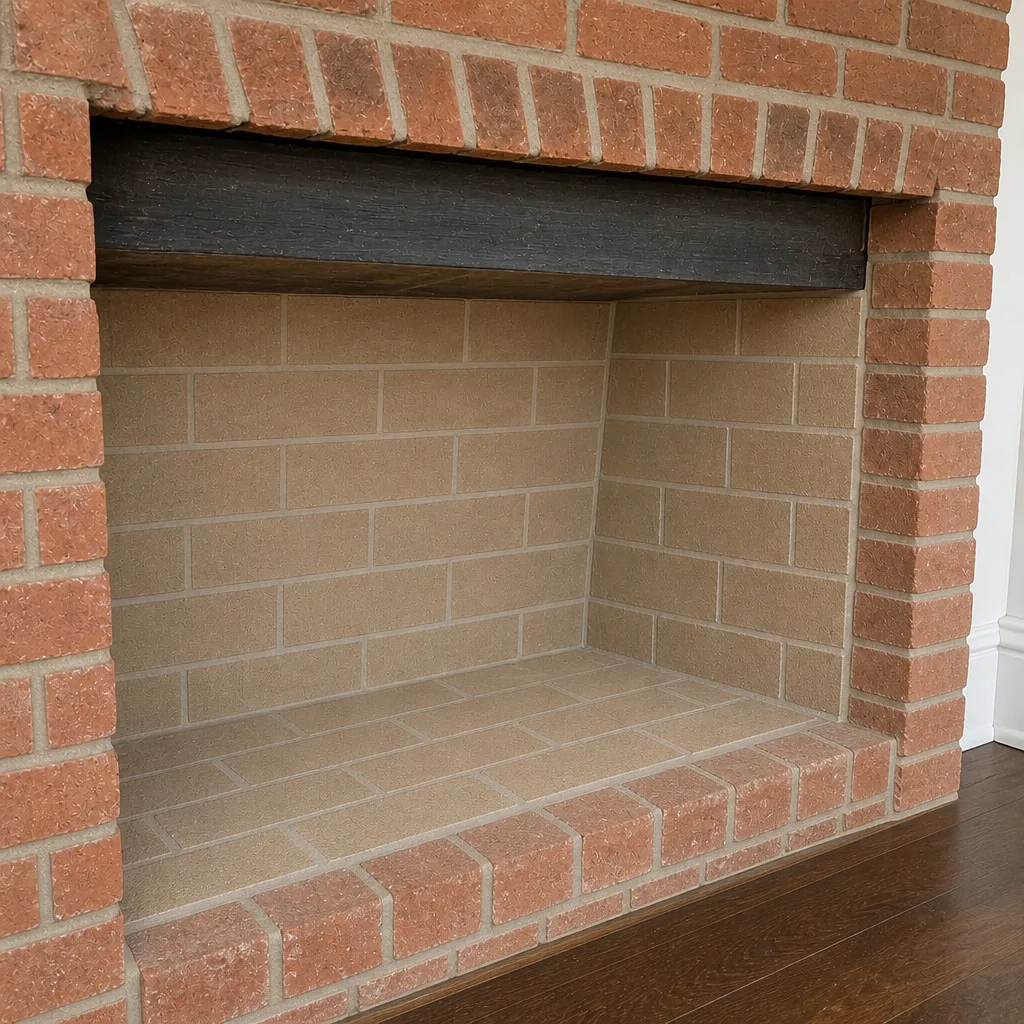
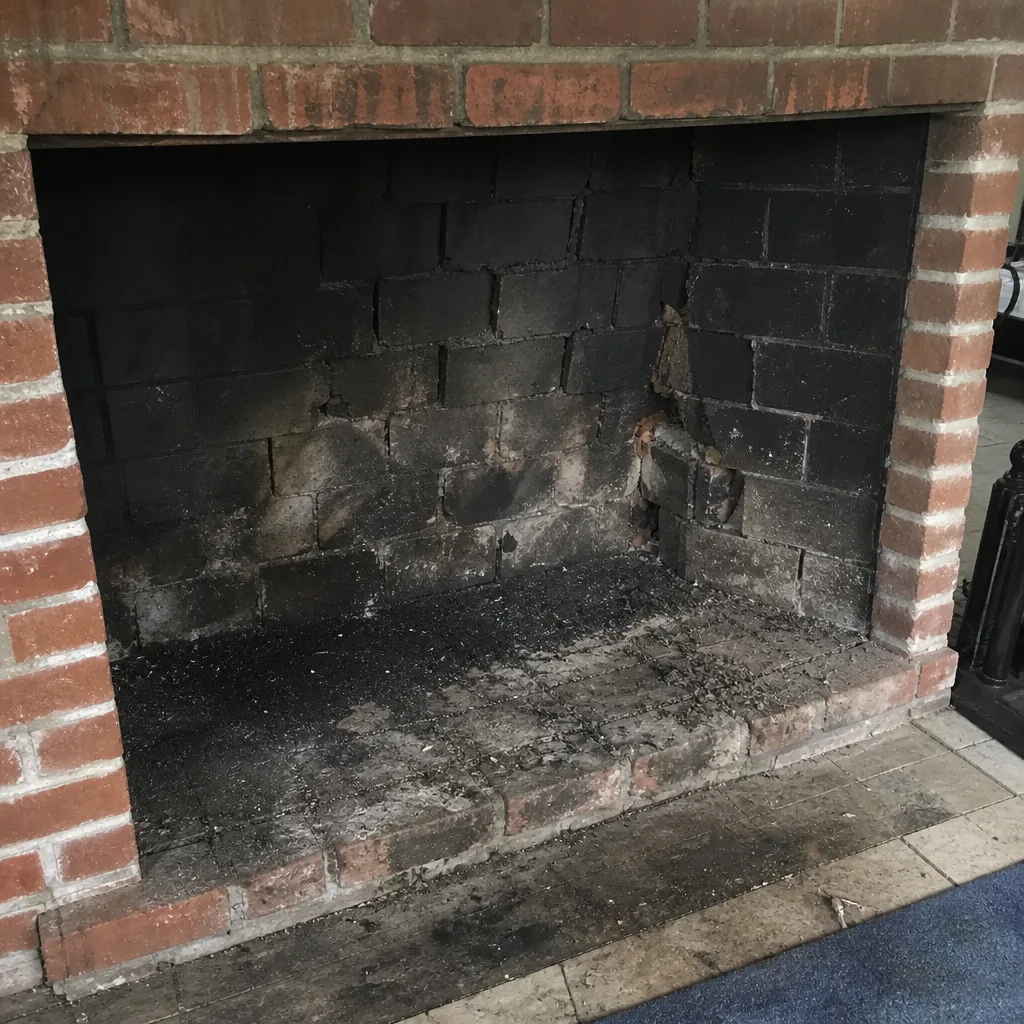
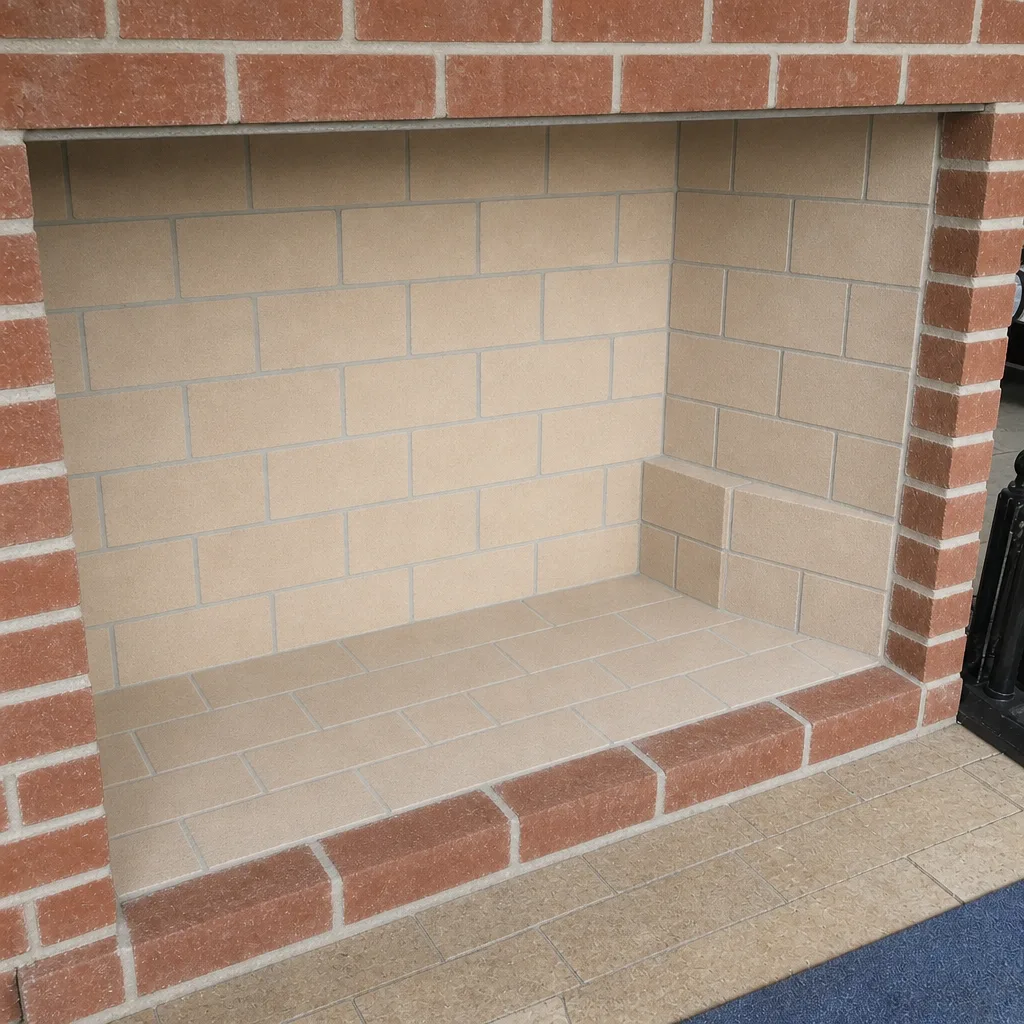
See the difference
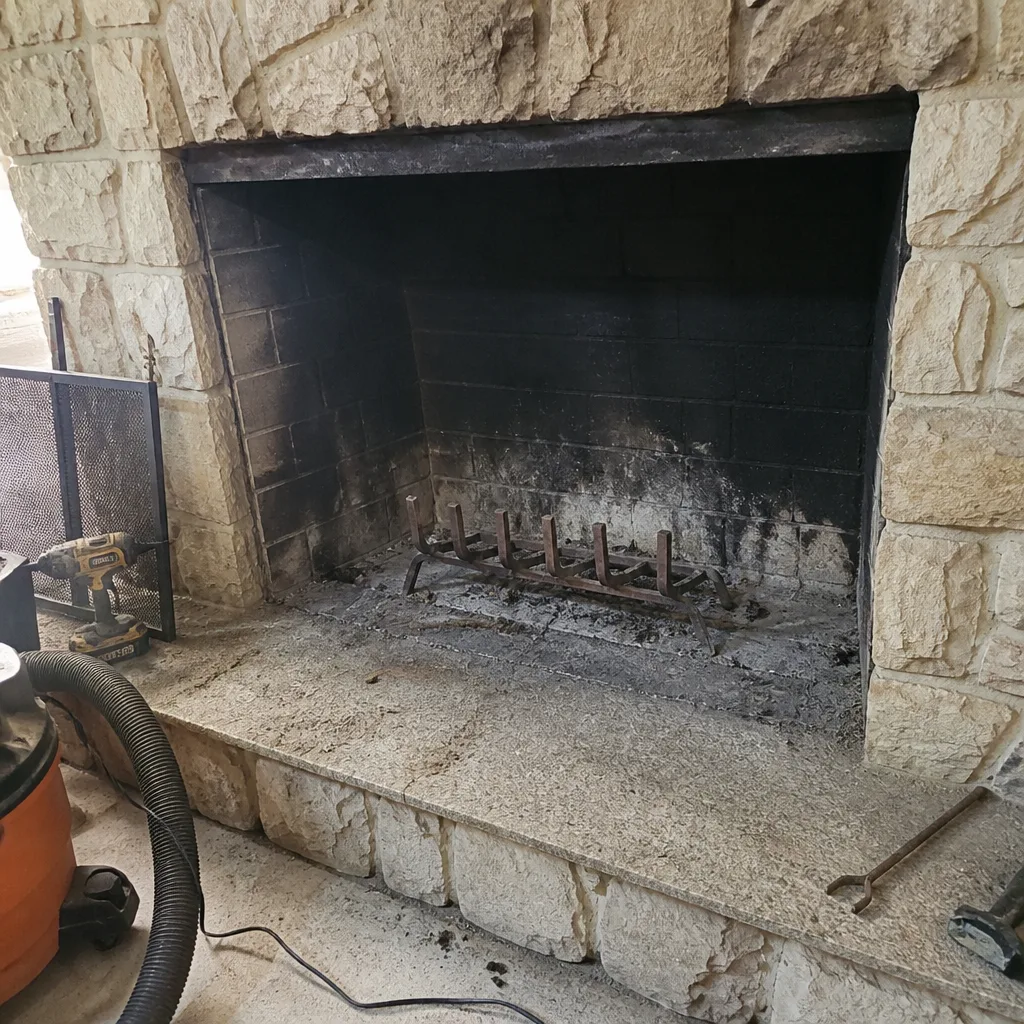 Before
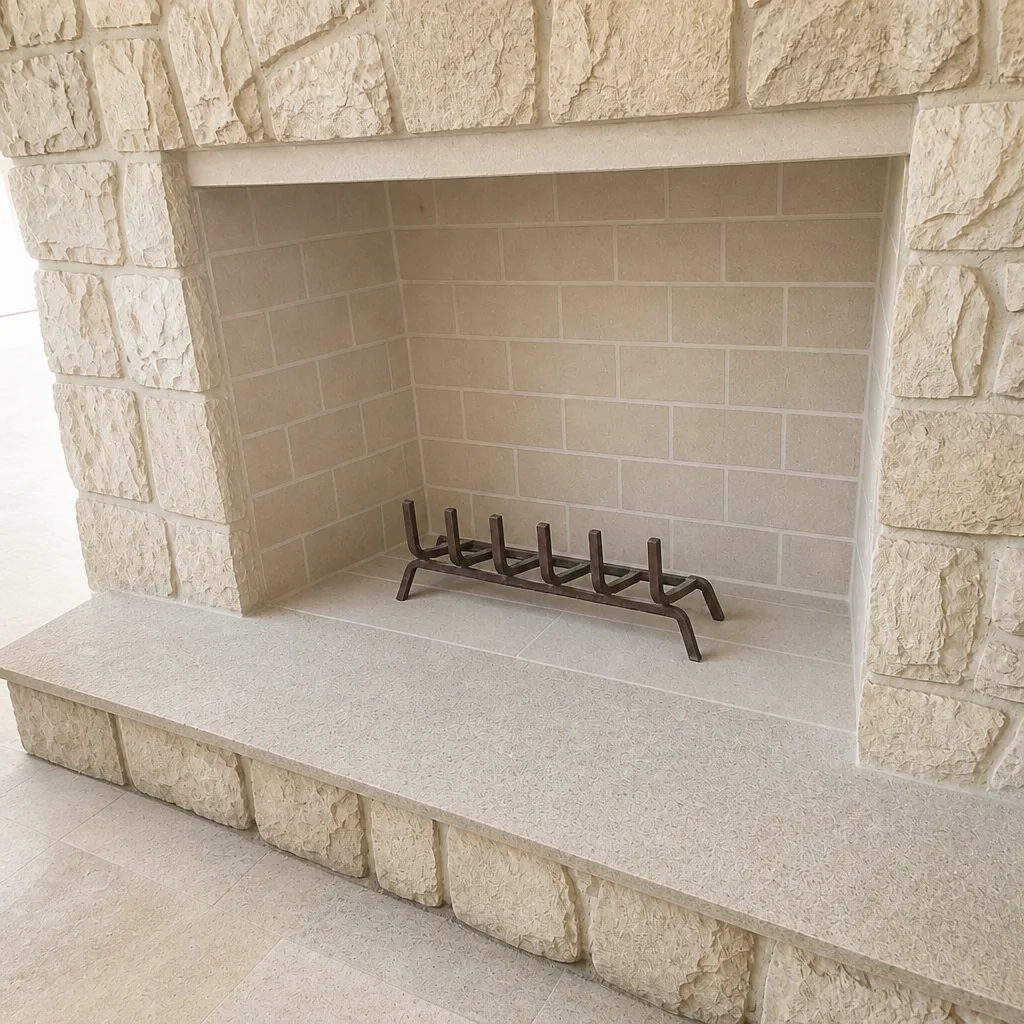 After
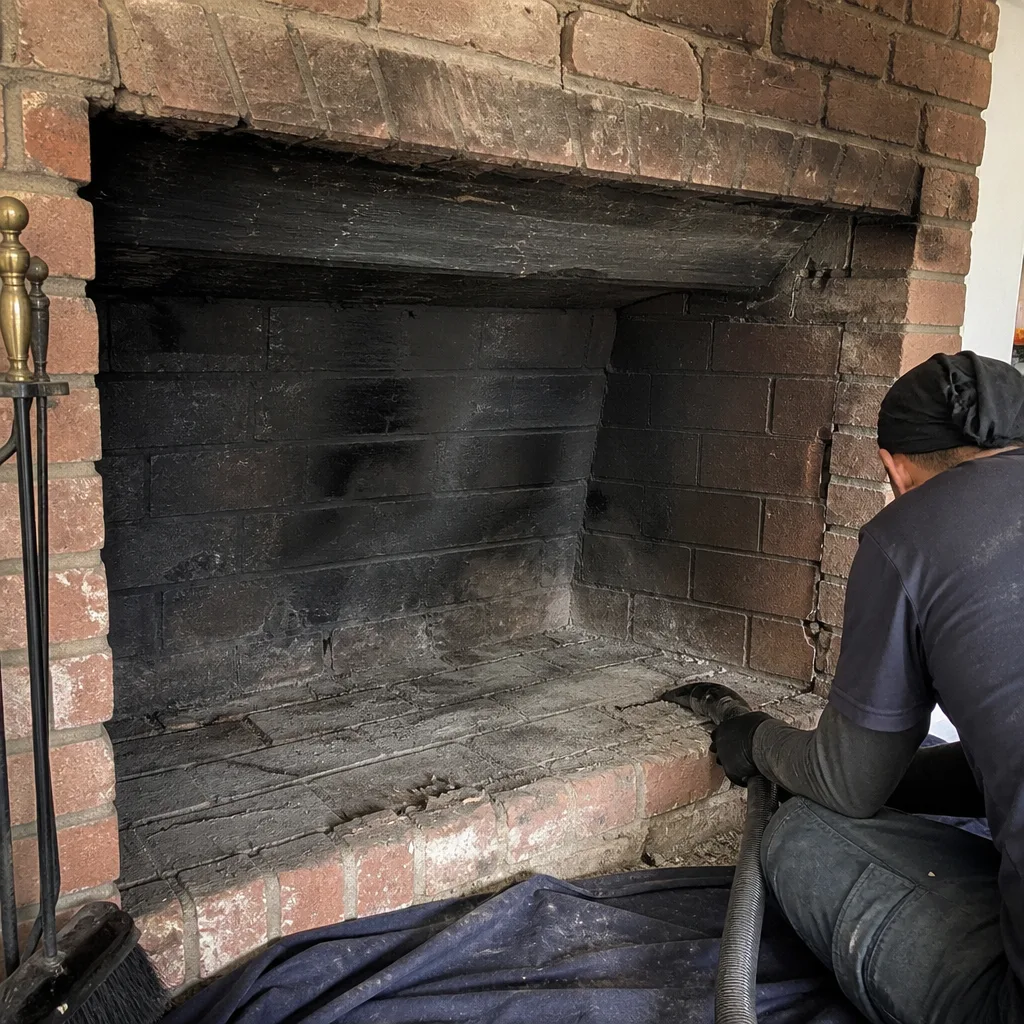 Before
 After
 Before
 After
When to Call a Professional
Call a professional when smoke backs up even after you’ve opened a window, when you smell a strong chemical or burning-plastic odor, when the firebox shows cracked masonry, or when water stains spread across the firebox. Any of those signals means stop using the fireplace until it’s inspected. Call a professional when you’re due for an annual inspection, when your insurer asks for documentation, or when you’re preparing a home for sale. And call when the smell of creosote stays strong on warm days or when you hear scratching above the damper – both have a clear fix, and neither gets better on its own.
Chimney Sweep Hollywood offers free estimates in Hollywood. Call (833) 974-6567. We answer 24/7. Fast dispatch from 7am to 7pm, Sunday through Friday. We inspect with camera equipment, document the findings in writing, and recommend only what the evidence supports – nothing else.
Frequently Asked Questions
A chimney sweep in Hollywood is priced per job by a written estimate, and we give that estimate free before anything begins. The final price depends on the flue’s condition and whether the sweep alone solves the problem or a repair is needed. Call (833) 974-6567 for an exact quote – estimates are free.
Only if the inspection shows the existing flue liner is structurally compromised – cracking, separation, or a direct path for fire into the home is what justifies a reline. Sometimes a HeatShield ceramic resurfacing can restore the flue and save you the cost of a full liner. We’ll show you the camera evidence and tell you honestly which one you actually need.
A chimney in Hollywood should be swept once a year when used regularly, or more often if you burn frequently or notice creosote odor on warm days. The purpose of the annual sweep is partially to clean and partially to inspect – the inspection is what catches problems early. Call (833) 974-6567 if you’re unsure how often your fireplace needs it.
Skipping a sweep lets creosote build through Stage 1 to Stage 2 and Stage 3, with two consequences. Stage 3 creosote is highly combustible and the stage most associated with chimney fires. And the humidity in Hollywood accelerates the damage to the crown, cap, and mortar joints while you’re not looking. Neither is worth putting off – a sweep is the cheaper problem every time.
A fireplace that smells stronger on warm or humid days almost always has creosote buildup off-gassing in the flue. Humidity raises the volatility of the residue, which is why the smell peaks then. The fix is a sweep, not a deodorizer – the flue needs the residue removed. Call (833) 974-6567 for an inspection.
We repair chimney crowns, caps, and caps-related water problems ourselves – it’s part of the three-service scope. Sweep. Inspect. Repair. All three, one company. If the crown is failing, we diagnose it during the inspection and handle the repair with professional product lines like Gelco and Famco for the caps. Call (833) 974-6567 for a free estimate on a crown or cap repair in Hollywood.
The Bottom Line
Most chimney problems in Hollywood come down to four causes: negative air pressure, failed caps or crowns, creosote buildup, or animal intrusion. Each one has a specific symptom, a specific test, and a specific fix. The window test settles the pressure question. The smell test separates creosote from animals. The water stain location tells you which layer of defense failed. Getting these right saves you money on repairs you don’t need and protects you from burning on a symptom that should have stopped you. When a symptom points to a structural problem or a stop-use signal, call a professional. Our technicians have up to 8 years of experience, and we document every inspection in writing so you have something to show your insurer, your buyer, or yourself.
Chimney Sweep Hollywood is a chimney specialist, not a generalist – sweep, inspection, and repair handled by the same company. We work with Chimney Sweep Hollywood product lines like DuraFlex flexible liner systems, Olympia Chimney, Copperfield, and HeatShield flue resurfacing. Reach out for a Hollywood inspection, or call (833) 974-6567. We answer 24/7. Fast dispatch from 7am to 7pm, Sunday through Friday. Estimates are free, and we name the brands we use because the materials matter as much as the labor.
Written by the team at Chimney Sweep Hollywood.