
Emergency Chimney Sweep Near Me: What Hollywood Homeowners Should Do First
A chimney fire doesn’t always sound like a roaring blaze. Plenty of homeowners have sat in a warm living room while a low-oxygen fire smoldered inside the flue, damaging the liner quietly, the only clues a faint cracking sound and a smell they wrote off as “just the wood.” The dramatic version gets everyone’s attention. The quiet version is the one that catches people off guard. If you’re searching for an emergency chimney sweep in Hollywood, the next few moves matter more than anything a crew does when they arrive. Here’s what to do first. If you’d rather not work through it alone, call (833) 974-6567. We answer 24/7.
Key Takeaways
- Get everyone out and call 911 if flames or heavy smoke are escaping the chimney, or if you see or smell a fire in the attic or walls.
- For a contained, smoky fire, stop adding wood, close the firebox doors, and shut the damper only after the fire is fully out.
- A chemical chimney fire suppressant does not replace a post-fire inspection. A certified sweep needs to look at the flue before you burn again.
- Describe the chimney’s location, liner type, and what you’ve observed on the phone so the right equipment comes the first time.
- Document everything in writing. Your insurer will ask for it.
What Counts as a Real Chimney Emergency in Hollywood?
A true chimney emergency is a fire, a structural failure, or a carbon monoxide event that’s happening right now. Everything else is urgent, but it can wait for a scheduled visit. Knowing which one you’re facing keeps you from either panicking over something minor or shrugging off something serious. Here’s how the three real emergencies break down.
- An active chimney fire. Loud roaring, popping, a vibrating flue, flames or dense smoke from the top. Call 911 immediately. Get out of the house.
- Fire in the structure. Smoke or a burning smell in the attic, walls, or upstairs rooms. This is no longer a chimney fire. Call 911 and evacuate.
- Carbon monoxide alarm. The alarm sounds, or you feel dizzy, nauseated, or headachy while the fireplace or gas insert is running. Get everyone outside, call 911, and don’t re-enter until cleared.
The urgent-but-not-immediate list is longer. A cracked flue tile found during a routine look, a persistent draft that’s gotten worse, water stains near the chimney breast, or a cap that blew off in a storm. None of these require emergency response, but none should be ignored for a season either. In a Hollywood home, where wood-burning fireplaces and gas inserts coexist in the same housing stock, a slow decline in draft is often the first sign of a partial blockage. Book a chimney sweep and get it checked properly.
What Should You Do in the First 15 Minutes of a Chimney Fire?
In the first 15 minutes, the sequence is: evacuate, call 911, then act only on what’s safe and contained. The order matters. A homeowner who calls a sweep before calling 911 has lost minutes that the fire department can’t get back.
- Get everyone out of the house. That includes pets. Don’t stop to grab anything.
- Call 911 from outside. Tell the dispatcher: chimney fire, address, whether smoke or flames are visible from the top of the chimney, and whether anyone is still inside.
- Don’t spray water down the flue. On a hot firebox and a hot flue, water can crack tiles or cause a steam burst. Leave suppression to the fire department.
- Close the firebox doors if you can do it safely on your way out. This limits oxygen to the fire. Don’t reopen them.
- Don’t close the damper on an active fire. A closed damper traps smoke and combustion gases in the house. Shut it only after the fire is fully out.
- After the fire department clears the scene, don’t light another fire. The flue needs an inspection first. Every time.
That last point is the one people skip. A chimney fire that burned hot enough to sound like a freight train has almost certainly damaged the liner, and a second fire through a damaged liner is a different, worse event. For a Hollywood homeowner, the right next step after the fire department is a certified inspection, not a lighter and a fresh log.
If your situation is smoky but contained, no visible flames, no structural signs, stop feeding the fire, let it burn down, and call a sweep to inspect. Call (833) 974-6567. A call outside dispatch hours is booked into the next opening, Sunday through Friday, 7am to 7pm.
Why Calling a General Handyman for Chimney Fire Aftermath Is a Bad Idea
A general handyman cannot properly document a post-fire chimney inspection in a way your insurer will accept, and that’s the practical reason to call a certified sweep. The safety reason is equally real: post-fire flue damage, and cracks that aren’t visible from the firebox, need a trained eye and the right inspection tools. A handyman looking up the flue with a flashlight is not an inspection.
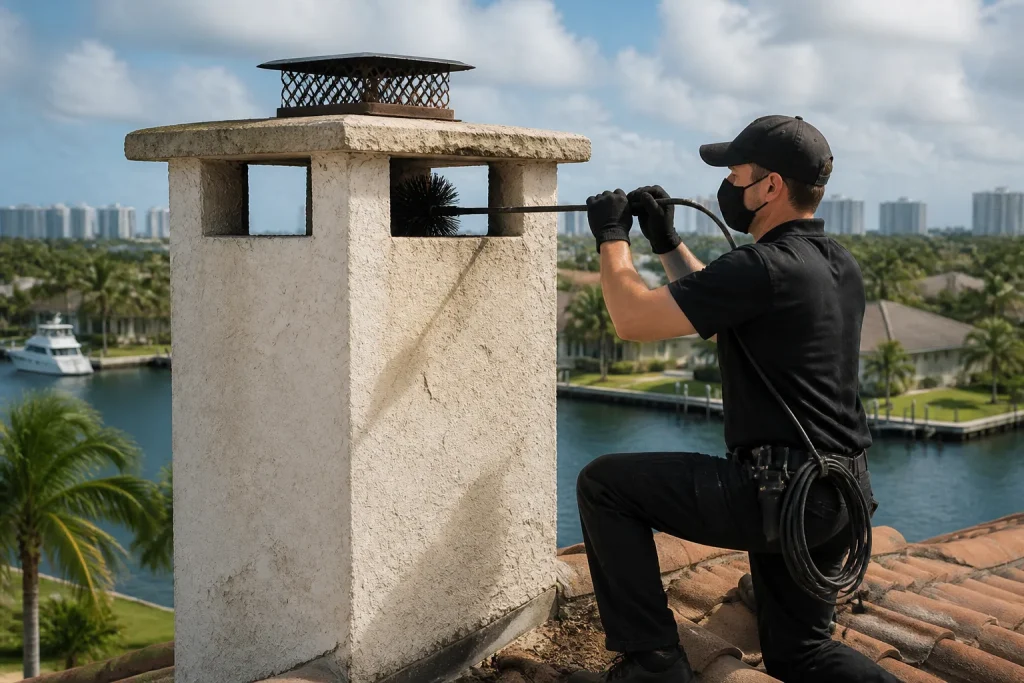
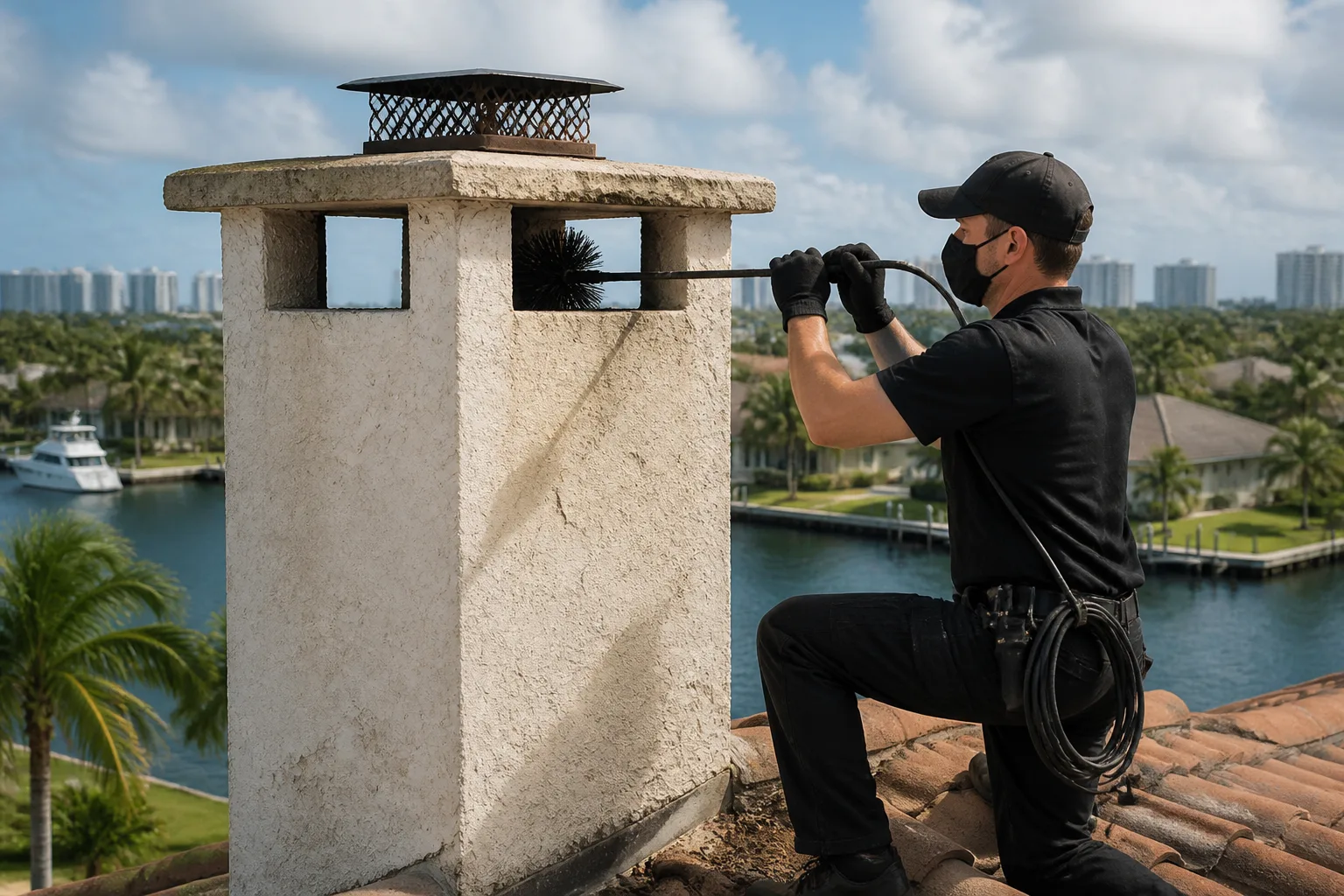
Here’s what runs through a proper post-fire evaluation in our experience. A camera inspection of the flue to look for cracked or spalled tiles, gaps at joints, and displaced sections. A check of the smoke chamber and damper assembly. A look at the cap and the crown for heat damage. Then a written report that names what was found, what it means, and what you should do next.
Your insurer will typically want that report, along with the fire department’s incident number if they responded. Real-estate disclosures during a sale need the same documentation. A warranty claim, if the chimney or liner is under one, needs it too. If the previous work was done with a DuraFlex flexible liner or HeatShield resurfacing, the paperwork will need to reflect that. A handyman’s verbal “looks fine” doesn’t survive contact with any of those processes.
We repair what the inspection finds, in writing, so you’re not chasing paper later. That’s the whole point of the sequence.
What Should You Tell the Sweep When You Call?
Tell the sweep four things: what’s happening right now, where the chimney sits on the house, what kind of liner is inside it, and what you’ve noticed for weeks before this. Those four details determine whether the right equipment and the right technician get to your door on the first visit.
Here’s the phrasing that actually helps:
- Current state: “The fire is out,” or “The fire is still going but it’s small,” or “It’s smoking heavily from the top.” Each of these suggests a different response.
- Location on the house: Interior chimney, exterior chimney on the north wall, off the kitchen, behind the garage. Exterior chimneys behave differently and need different access.
- Liner type: “Original clay tile,” “a stainless flexible liner was installed,” “I don’t know.” Don’t guess. “I don’t know” is a useful answer for a sweep.
- Recent symptoms: Draft that’s been weak for weeks, a smell you’ve noticed, a faint cracking sound you couldn’t place, a creosote smell that never cleared out.
That last category is where the quiet emergencies tend to live. A homeowner who mentions a subtle cracking sound is describing something very different from a homeowner reporting a smokey fire. The sweep will treat them differently. For a Hollywood home with a masonry chimney from the mid-century building boom, the equipment list often includes a camera and rotary sweep tooling. For a home with a modern flexible liner, it might mean a different sweep head and a gentler touch. Telling us which one you have means we show up prepared.
When Should You Call a Sweep Instead of Waiting?
Call a sweep when the fire is out, everyone is safe, and you need to know the flue’s actual condition before you burn again. That’s the moment, not the fire itself. A chimney sweep isn’t the emergency responder. A chimney sweep is the person who tells you whether the system can be trusted again.
While we’re on it, a word of practical advice for anyone tempted to know the flue’s condition from the outside: a chimney flue that looks fine at the firebox can be spiderwebbed with cracks ten feet up. The interior view is the only honest one. We’d no sooner certify a flue by looking at the firebox than a doctor would diagnose a broken arm by glancing at the sling.
While we’re on it, a few cases where the right call is to schedule an inspection right away:
- Any chimney fire, no matter how brief or quiet.
- A creosote smell that returns every time you use the fireplace.
- A cap that’s missing, broken, or was knocked loose. A cap is not optional. It’s the first line of defense against moisture damage and animal intrusion, and we fit Gelco and Famco caps because they hold up in our climate.
- Water stains, white discoloration, or crumbling mortar near the chimney.
- An upcoming insurance renewal, home sale, or heating-season start.
If the work calls for a partial rebuild, a full reline, or something the camera didn’t show, we can often resurface the existing flue with HeatShield ceramic rather than replace the whole liner. That saves a real amount of money when it’s the right call, and we’ll tell you honestly when it isn’t. If the flue’s geometry is irregular, offset, or older, a DuraFlex flexible liner is usually the better fit than rigid sections. These are decisions to make after the inspection, not before.
A note on scheduling: our crews are dispatched Sunday through Friday, 7am to 7pm, and we’re closed on Saturday. Call (833) 974-6567. We answer 24/7. Fast dispatch from 7am to 7pm.
Related services in Hollywood
If the post-fire inspection turns up damage, we handle the Chimney Sweep Hollywood side of the job and the repair under one roof, so there’s no handoff between a sweep company and a mason. Same company, same crew, one written report.
The Bottom Line
The 15 minutes before anyone arrives decide how the rest of the story goes. Evacuate first, call 911 for anything that’s actively burning or producing carbon monoxide, and don’t relight the fireplace until a certified inspection says the flue is sound. For the smoky, quiet, or “I’m not sure what I’m hearing” version of the emergency, the right call is a speedy inspection, not an emergency response. Our technicians have up to 8 years of experience and we document every visit in writing, the same report your insurer, your buyer, or your own peace of mind will eventually ask for.
If you’re in Hollywood and need help, Chimney Sweep Hollywood offers free estimates. Call (833) 974-6567. We answer 24/7. Fast dispatch from 7am to 7pm, Sunday through Friday.
Frequently Asked Questions
It depends on what’s actually needed: a standard sweep, an inspection with a camera, or post-fire repair work. We don’t quote a number before we’ve seen the flue, and we don’t want you agreeing to one either. Every job is priced per the written estimate, and the estimate is free. Call (833) 974-6567 for an exact quote.
No. Not until a certified sweep has inspected the flue and confirmed it’s safe. Even a brief fire can crack a tile, open a joint, or warp a liner in ways you can’t see from the firebox. A second fire through a damaged flue is a much bigger problem than the first. Call (833) 974-6567 to schedule the inspection.
Call 911 if you see or smell smoke in the attic, walls, or upper rooms, or if the carbon monoxide alarm has gone off. If the smoke is confined to the fireplace and flue, stop adding wood, open a nearby window a crack to help draft, and call a sweep. Heavy smoke with no visible fire often points to a blockage or a draft failure, not an active fire. Call (833) 974-6567 and we’ll help you sort out which one it is.
Three things: the fire department’s incident number if they responded, a written post-fire inspection from a certified sweep that documents the flue’s condition, and photos of any visible damage. Get all three in one place before you call your insurer. The inspection report is the document that does the heavy lifting, and we write one after every visit. Call (833) 974-6567 for a free estimate and we’ll get the report started.
Written by the team at Chimney Sweep Hollywood.
Need Chimney Cleaning Help?
Call Chimney Sweep Hollywood - licensed & insured, here with fast help in Hollywood.
(833) 974-6567